What To Inspect Before Buying a Grumman Yankee
Buying a Grumman Yankee can be a smart move. These airplanes are efficient, distinctive, and more engaging to fly than many buyers expect from the small two-seat category. But that same distinctiveness is exactly why a Yankee purchase deserves more than a generic pre-buy inspection.
On HangarVault, the best Grumman buyers are the ones who treat the pre-buy as a type-specific investigation, not a checkbox. You do not just want to know whether the airplane can fly today. You want to know what kind of ownership experience it is likely to become once it is yours.
If you are shopping an AA-1, AA-1A, Lynx, or T-Cat, these are the main areas worth reviewing before you commit.
Start With a Type-Aware Inspector
This is the most important decision in the process. A mechanic who knows light aircraft in general is useful. A mechanic who knows Grumman Yankees specifically is far better. Type familiarity matters because the Yankee family is not just another small trainer. Construction details, known wear points, and common ownership mistakes are easier to catch when the inspector has seen them before.
If the pre-buy begins without that type knowledge, the risk of missing the important story goes up immediately.
Review the Bonded Structure Carefully
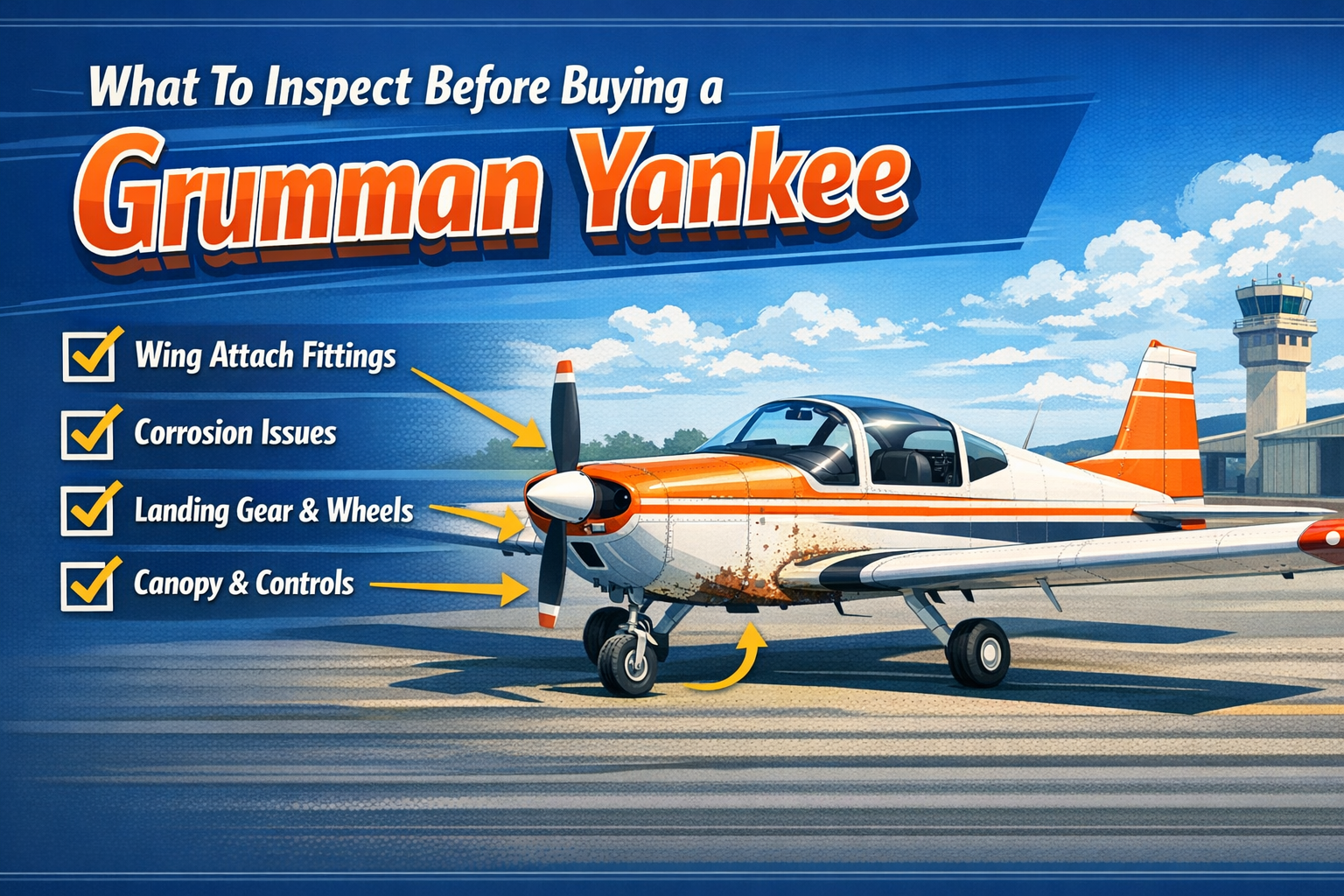
One of the defining characteristics of the Yankee family is bonded aluminum construction. That is part of what gives the airplane its clean aerodynamic shape, but it also means buyers need an inspection that understands the implications. You are not just looking for cosmetic condition. You are looking for structural integrity, signs of deterioration, and evidence that prior repairs were handled properly.
This is not an area for guesswork. If the inspection cannot speak clearly to the condition of the bonded structure, the pre-buy is incomplete.
Check Corrosion and Storage History
Like many vintage light aircraft, the Grumman line rewards airplanes that have been stored well and flown consistently. Corrosion history, environmental exposure, and long periods of inactivity matter. Ask where the airplane has lived, how often it has flown, and what the logs say about extended downtime.
A clean-looking airplane can still have a weak story underneath the surface. Storage history is part of value, not just background trivia.
Confirm Logbook Quality and Continuity
Grumman buyers should be especially disciplined about records. Confirm total time consistency, engine status, propeller entries if applicable, major repair history, and any recurring discrepancies. You want clear evidence that the airplane has been tracked intelligently over time.
A model with strong enthusiast appeal can tempt buyers to forgive weak paperwork. That is a mistake. Records quality affects value, insurability, resale confidence, and your ability to understand what you actually bought.
Evaluate Landing Gear, Brakes, and Control Feel
The Yankee’s reputation is tied closely to how it feels in operation, especially on landing. That means gear condition, brake condition, control rigging, and overall control harmony deserve attention. You are not just checking for compliance. You are checking whether the airplane is presenting like a healthy example of the type.
If the controls feel off, or the airplane’s ground-handling story does not match what knowledgeable Yankee operators would expect, that deserves explanation before money changes hands.
Look Honestly at Engine and Avionics Reality
As with any vintage aircraft, the engine and panel can change the economics of the deal dramatically. A well-running engine with a believable maintenance story is one thing. An engine near major expense with weak records is something else. The same goes for avionics. Legacy equipment can be acceptable, but only if the purchase price reflects the modernization path ahead.
Do not confuse a flyable airplane with a financially settled airplane. Many older aircraft stay cheap only until the new owner starts solving deferred problems.
Use the Inspection To Decide, Not Just Negotiate
A pre-buy should not exist solely to extract a price reduction. It should help you decide whether the airplane is worth owning at all. Some findings support negotiation. Some findings support walking away. The buyer’s job is to know the difference.
The right Grumman Yankee can be a deeply rewarding aircraft. But the wrong one can become an airplane that looked charming on the ramp and expensive in the hangar. The pre-buy is where that difference gets exposed.