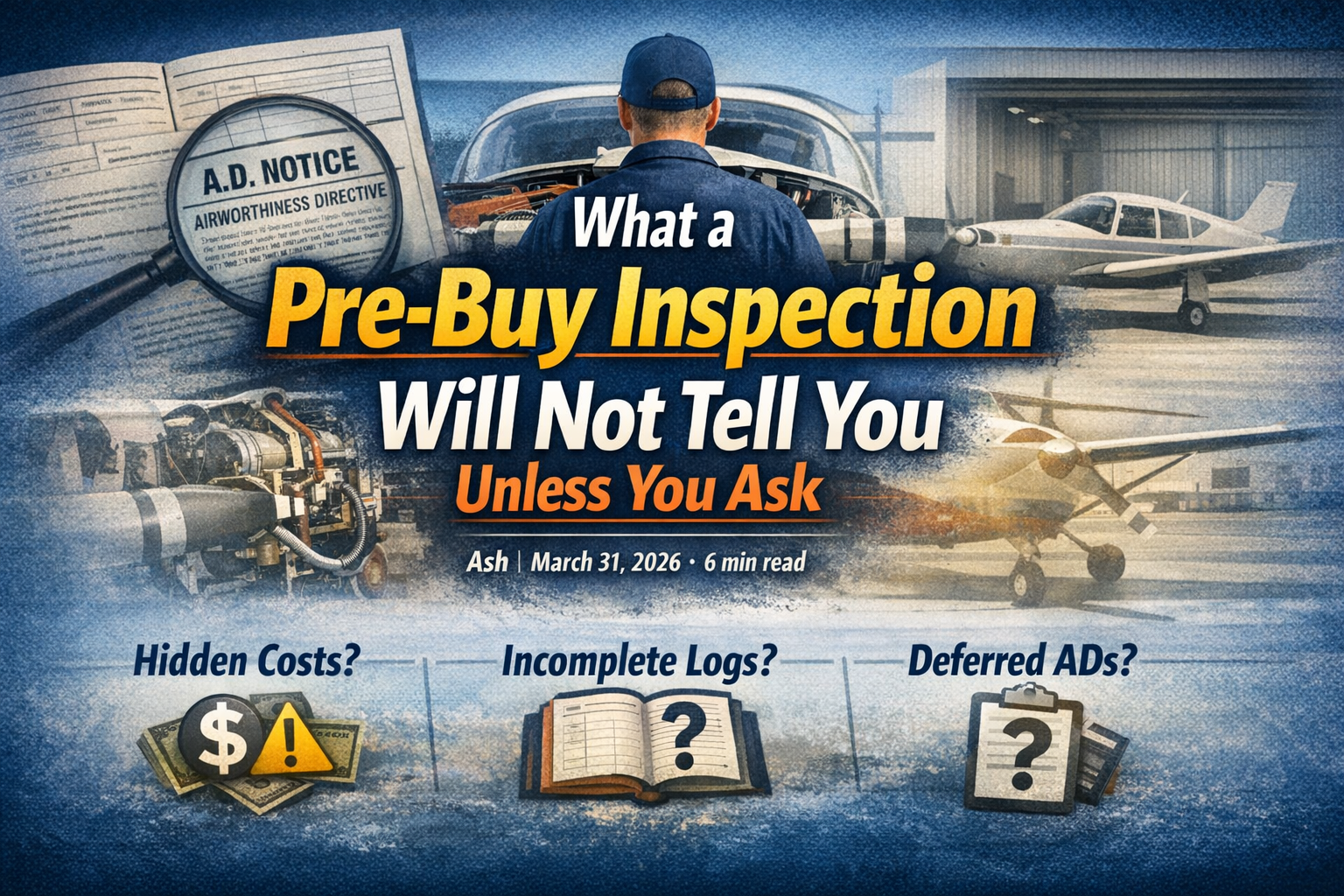
What a Pre-Buy Inspection Will Not Tell You Unless You Ask
A pre-buy inspection is one of the most misunderstood parts of an aircraft transaction. Buyers talk about it as if it is a magic shield: hire a mechanic, inspect the airplane, and either proceed or walk away. In practice, a pre-buy is only as good as its scope, the records behind it, and the questions the buyer asks before the mechanic turns the first screw.
That matters because the biggest ownership surprises are not always obvious mechanical defects. They are often hidden in maintenance history, deferred compliance, poor documentation, mismatched expectations, or the cost of bringing an airplane up to the buyer's standard after closing. On HangarVault, buyers and sellers alike benefit when the market treats the pre-buy as a decision tool rather than a ritual.
If you are shopping for a piston single, turboprop, warbird, or experimental aircraft, the principle is the same: a pre-buy inspection does not automatically answer every important question. You have to define what you need to learn from it.
The Pre-Buy Is Not the Same Thing as an Annual
This is the first place buyers get into trouble. A pre-buy inspection can be thorough, but it is not automatically an annual inspection, and it does not create the same obligations. Some buyers assume that if the aircraft passes pre-buy, they are effectively cleared for ownership. That is not what the mechanic is telling you.
A good pre-buy is tailored to the specific aircraft, mission, and risk profile. It may focus heavily on corrosion, engine condition, damage history, avionics functionality, or missing logbook continuity. An annual, by contrast, is a regulatory inspection performed to determine airworthiness at that point in time. One can inform the other, but they are not interchangeable.
That distinction matters in negotiations. If you want the inspection to answer ownership questions, you need to say that explicitly. Do not just ask for a pre-buy. Ask for a pre-buy that includes records review, AD research, known-type pain points, and a written list of immediate, near-term, and discretionary costs.
Records Gaps Can Cost More Than Mechanical Findings
Many aircraft deals go sideways not because the airplane is broken, but because the paper trail is weak. Missing logbooks, vague damage entries, undocumented component changes, and inconsistent times can depress value fast. In some cases, they can make financing, insurance, or resale materially harder later.
That means the records review is not a side task. It is central to the purchase decision. Ask the inspector to verify total time consistency, engine and prop times, major repair history, AD compliance, STC documentation, and any signs that required entries are incomplete or reconstructed. If the aircraft has changed hands often, or lived through long periods of inactivity, that review becomes even more important.
Buyers also need to understand the difference between a manageable records imperfection and a marketability problem. A minor clerical inconsistency may be fixable. A major break in engine history or undocumented damage event is a different category. The pre-buy should tell you not just whether the aircraft can fly, but whether the file will haunt you when you try to sell it.
Engine Health Is More Than Compression Numbers
Compression results get too much attention because they are easy to summarize. They matter, but they do not tell the whole story. A buyer who focuses only on compression can miss oil analysis trends, metal findings, borescope evidence, calendar-time deterioration, poor operating history, or long inactivity periods that create corrosion risk.
For piston aircraft, ask for a borescope inspection and a realistic discussion of how the engine has been used. Has it flown regularly? Has it sat for months at a time? Was it operated in a training environment, or by a single careful owner? For turbine aircraft, the questions shift toward hot section timing, trend data, overhaul planning, and component programs.
The right question is not Is the engine okay today? It is What is the probability that this engine becomes expensive on my watch? The mechanic cannot predict the future, but a strong pre-buy can help you price that risk honestly.
Avionics, Autopilots, and Deferred Upgrades Deserve a Separate Budget
Another common mistake is treating installed avionics as either fully working or fully broken. Real aircraft ownership is messier. A panel may technically function while still being outdated, unsupported, poorly integrated, or expensive to maintain. Legacy autopilots are notorious for this. They may work during the demo flight and still become a maintenance headache after purchase.
Ask the inspector to separate airworthiness from ownership practicality. A radio stack that passes a basic function check may still be a near-term replacement candidate. An autopilot with intermittent behavior may not kill the deal, but it should change the number. Old wiring, incomplete equipment documentation, and unsupported displays can all create surprise costs after closing.
For many buyers, the right answer is to build a post-purchase modernization budget before making the offer. That keeps the purchase price and upgrade plan tied together instead of pretending the aircraft is cheaper than it really is.
Type-Specific Knowledge Changes Everything
The best pre-buy inspector for a given deal is rarely just a good A&P. The best choice is someone who knows the type, its failure patterns, and its common ownership traps. Mooneys, Bonanzas, Cirrus aircraft, ag planes, warbirds, and experimentals all have very different watch items. Corrosion hotspots, landing gear issues, structural concerns, parts support realities, and recurring paperwork mistakes vary by model.
This is why buyers should avoid choosing an inspector solely based on geography or speed. A local shop may be convenient, but convenience is not the same thing as relevant expertise. If you are buying a specialized aircraft, the wrong inspector may miss the exact things that matter most.
Sellers should understand this too. A clean transaction gets easier when the aircraft is presented with organized records, clear recent maintenance, and realistic answers to type-specific buyer concerns. The smoother the information flow, the faster serious buyers move.
Use the Inspection to Build a Decision Matrix, Not Just a Punch List
At the end of the inspection, many buyers ask the wrong closing question: Should I buy it? That puts too much weight on the mechanic and not enough on the buyer's own mission, budget, and tolerance for downtime.
A better framework is to sort findings into four buckets:
- Airworthiness now: items that must be corrected before safe or legal operation.
- Near-term ownership costs: items likely to require action within the first 12 to 24 months.
- Value and resale concerns: records, cosmetic, or configuration issues that change market appeal.
- Optional improvements: upgrades you want, but that are not defects.
Once you categorize the findings, the negotiation gets cleaner. Some items support a price reduction. Some justify seller correction before closing. Some simply mean the airplane is not a fit for your budget. That is the real output of a high-quality pre-buy: not a yes-or-no answer, but a sharper economic picture.
The Best Buyers Scope the Inspection Before They Fall in Love
Emotion distorts aircraft deals. By the time a buyer arranges a ferry flight, talks to the seller, and imagines ownership, objectivity starts slipping. The disciplined move is to decide in advance what would cause you to walk, what would trigger renegotiation, and what level of records imperfection you can tolerate.
That discipline is especially important in active markets, where buyers feel pressure to move quickly. Speed matters, but speed without process is how people inherit expensive surprises. A thoughtful pre-buy strategy lets you move fast without getting sloppy.
For sellers, the lesson is straightforward: the more transparent and organized the aircraft package is, the more confident serious buyers become. For buyers, the lesson is even simpler: do not outsource judgment to the phrase it passed pre-buy. Make sure the inspection is designed to answer the questions that actually affect ownership.
The best aircraft transactions happen when both sides treat information quality as part of the asset. That is exactly the kind of marketplace discipline the industry needs more of.